
Navigating Language Barriers
Resources for Learning English
ESL Classes

Local universities, community colleges, adult education centers, and community organizations often offer English as a Second Language (ESL) classes at various levels. The EducationUSA page on ESL Programs advises students to select accredited Intensive English Programs by organizations such as ACCET (The Accrediting Council for Continuing Education and Training) and CEA (the Commission on English Language Program Accreditation). It highlights the importance of choosing programs that are members of AAIEP (the American Association of Intensive English Programs, also known as EnglishUSA) and UCIEP (University and College Intensive English Programs), which set high standards for quality education. In addition, resources like Intensive English USA and College Navigator can help in researching options based on various criteria. You could also visit an EducationUSA advising center, attend webinars, and participate in student information fairs for more guidance.
To find adult education centers in your area, state departments of education are a great resource for finding adult education centers. Each state’s education department typically has a dedicated section on their website for adult learning and continuing education, which includes information on locations, programs available, and enrollment procedures. You can find these resources by searching for “(Your State) Department of Education adult education programs” in any search engine. This will lead you to the official state website where you can access information about adult education centers.
Online Learning Platforms
This site offers a range of engaging content for different skill levels, using videos and audio materials. It uses authentic materials, like news clips and real-life conversations, which help learners understand and use English in real-world situations. Authentic materials are beneficial because they expose learners to the natural use of language, including slang, idioms, and cultural references, making the learning experience more relevant. This practical approach makes it easier for learners to connect their studies with everyday English use, which can enhance their language development.
Duolingo gamifies language learning, which makes it enjoyable and less stressful. It uses interactive exercises to build your vocabulary and grammar skills and supports your English learning journey with a step-by-step approach that progresses based on your native language. Instant feedback and rewards help keep you engaged and motivate consistent practice, which fosters continuous improvement.
Duolingo’s free version provides extensive vocabulary learning and introduces users to a variety of sentence structures. The platform’s gamified features encourage regular participation. Additionally, Duolingo monitors your practice time and progress, ensuring you remain engaged and can track your learning advancements.
Super Duolingo is an upgrade which offers several additional features. Subscribers can study without interruptions from ads. Another feature is Unlimited Hearts. In the regular Duolingo setup, accumulating too many mistakes costs “hearts,” which leads to either pause your learning while you wait for hearts to regenerate, or spend time reviewing previous lessons to earn more hearts. This can disrupt the flow of learning, especially for those who prefer continuous progression without breaks. With Unlimited Hearts, learners can keep moving forward through new lessons, even after making multiple errors, ensuring a smoother and more consistent learning experience.
Another feature is Personalized Practice, which delivers customized lessons that target the learner’s specific mistakes. This helps in solidifying understanding and overcoming weak points. Additionally, the Unlimited Legendary Challenges permit infinite attempts to master each unit, which promotes comprehension and retention of material.
Rosetta Stone, a paid program, immerses you in English by mimicking how you learned your first language, without relying on translations or explicit grammar explanations. This method involves matching phrases to pictures and learning through repetition, integrating real-life scenarios to make language learning more meaningful and applicable. While some users find this approach engaging, as it enables them to form sentences they’ve not previously studied, others struggle with the absence of grammar guidance and translations. Additionally, the pace of Rosetta Stone is often described as slow.
Public Libraries
Public libraries can be an excellent resource for immigrant families looking to enhance their English skills. Many libraries offer free ESL classes and language workshops. They often provide access to digital platforms like Mango Languages and eBooks designed for language learning. Libraries sometimes host cultural events and community gatherings, offering opportunities to practice English in social settings. Additionally, libraries have programs aimed at helping children of immigrant families improve their English skills through storytime sessions, interactive activities, and educational games. Free computer and internet access can be used for online language courses and resources. Engaging in volunteer activities at the library can also provide practical language practice and help integrate into the community.
Language Exchange Programs
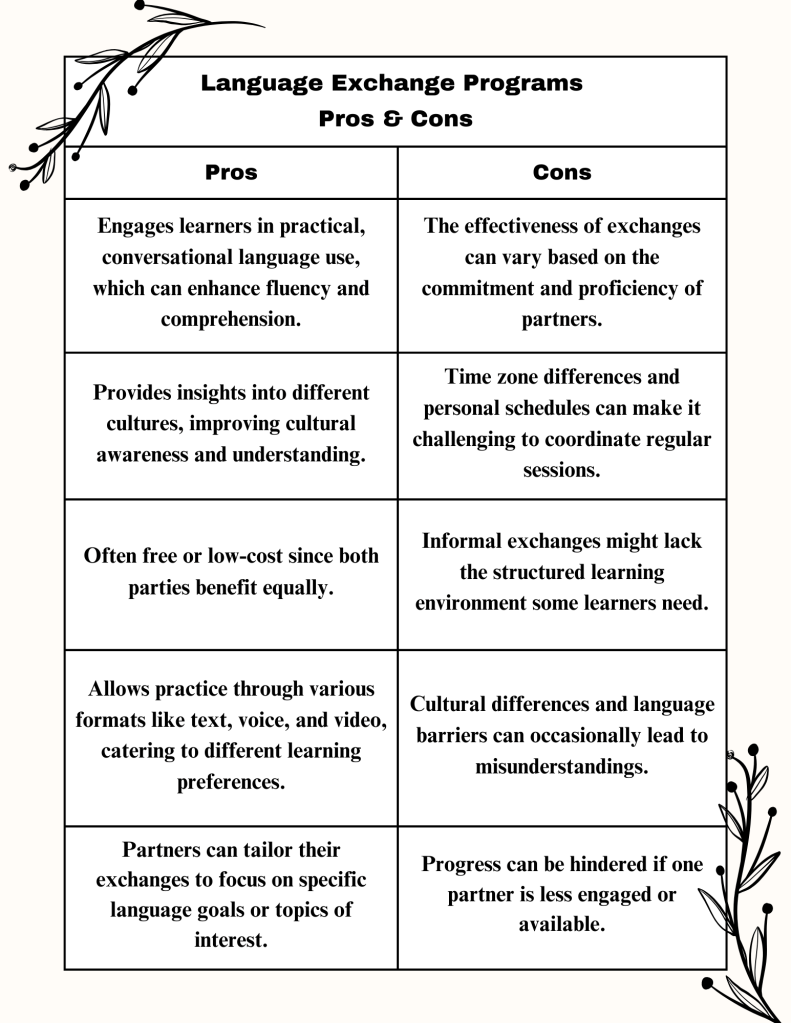
Language exchange programs connect learners with native speakers of the language they are trying to learn. These exchanges are mutual, allowing both participants to benefit by practicing their target languages with a native speaker. Many cities and towns have local language exchange meetups organized through community centers, nearby universities, libraries, or social groups. These in-person meetings can provide additional support and networking opportunities.
Popular platforms include HelloTalk, Tandem, Meetup, and Speaky.

Community Gatherings
Community gatherings can be an excellent way for immigrant families to improve your English skills while building a supportive network. These gatherings offer an opportunity for cultural exchange, allowing families to learn about and share different cultures. This not only helps you adapt to your new environment but also provides a space to celebrate your heritage.
Organizing child-friendly activities during these gatherings ensures that younger family members can practice English in a fun and engaging way, while parents interact with other adults. Additionally, community gatherings can serve as a platform for sharing valuable information and resources, such as job opportunities, housing advice, and educational programs, which can be particularly beneficial for new immigrants.
Moreover, being part of a community offers emotional support and reduces feelings of isolation. Families can share your experiences and challenges, offering encouragement and advice to each other. Participating in or organizing volunteer opportunities within the community can also help families practice English in real-world contexts, build connections, and give back to your community.
Tutoring
Tutoring can be a very effective way to improve your English proficiency. Tutors can tailor lessons to your specific needs and learning style. Tutoring also offers flexible scheduling, accommodating your availability, which can promote consistent learning. You may feel more comfortable asking questions and will receive immediate feedback. This customized support can aid in language acquisition and overall educational success.
There are various types of tutoring, such as one-on-one tutoring and group tutoring. One-on-one tutoring provides personalized attention to address specific learning needs and meet your learning pace, whereas group tutoring that can be organized with other families is more cost-effective and fosters a collaborative learning environment.
When searching for tutors, families can use online searches with keywords like “English tutor near me” or “online English tutoring,” ask for recommendations from other families or community members, and check local libraries and community boards for advertisements or flyers for tutoring services.
It’s important to consider the qualifications and experience of the tutor. Checking credentials and asking for references can ensure that the tutor is effective and reliable. Trial sessions can be arranged and can help assess the compatibility and teaching style of the tutor. Cultural sensitivity is another crucial factor, as tutors who are culturally aware can better address the specific challenges faced by Chinese-speaking learners.
Interactive and engaging methods, such as the use of technology and practical applications, can enhance your learning experience. You should also consider the cost and commitment involved, ensuring that the tutor fits within your budget and is available for consistent, long-term support.
While tutoring can be effective, it is important to note that it also has its potential downsides. One of the primary concerns is cost, as personalized one-on-one sessions can be expensive. Additionally, the quality of tutoring can vary significantly depending on a tutor’s qualifications, experience, and teaching philosophy. Lastly, the personalized nature of tutoring means progress can sometimes be slow, as sessions focus on individual needs and pacing. This may not align with the expectations of faster results that some families might have.
Translation and Interpretation Services

Tips on finding quality translation and interpretation services:
- Identify Your Needs- Determine whether you need translation (written) or interpretation (spoken) services. For interpretation, decide whether you prefer or need in-person or remote services. Identify the field of expertise required, such as legal, medical, or technical.
- Check Qualifications- Look for certified professionals, such as ATA certification. You could also request references from previous clients and review samples of their work to gauge their skills and reliability.
- Specialization- Choose professionals who specialize in the field that meets your needs, such as legal, medical, or other areas.
- Tools- For interpretation, check what platforms they use if you need remote services.
- Customer service- The providers should communicate clearly and promptly and demonstrate a good understanding of your requirements.
Recommended Services:



 East Meets West