
Tips for Choosing the Right School
Choosing the right school is a critical decision that can significantly impact a child’s educational journey and overall development. Thus, it is essential to approach it with a thorough understanding of both the child’s needs and the unique offerings of each school.
The first step in selecting the right school is conducting a self-assessment. Families should take the time to gain a deep understanding of their children, including their learning styles, strengths, and areas for improvement. It is crucial to recognize whether a child thrives in a structured environment, benefits from a hands-on approach, or requires specific resources to succeed. For example, some children may excel in settings that offer clear routines and expectations, while others might flourish in environments that provide more creative freedom and experiential learning opportunities. By identifying these preferences, you can begin to narrow down the types of schools that might be the best fit.
Once you have a clear picture of your child’s needs, the next step is to research potential schools thoroughly. This involves delving into each school’s philosophy, environment, and resources. It is important to look at the academic programs offered, the range of extracurricular opportunities available, and the support services provided. Additionally, understanding the overall school culture is vital. For instance, some schools might emphasize a rigorous academic curriculum, while others might prioritize holistic education and personal development. By gathering detailed information about each school, families can start to see how well the schools align with their child’s needs and aspirations.
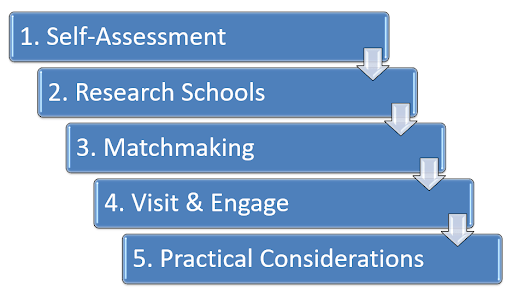
The process of matchmaking comes next, where families compare the insights gained from the self-assessment with the characteristics of each school. The goal is to find a school where the child will not only achieve academically but will also be supported in their personal growth and development. This step involves a thoughtful comparison of the child’s unique qualities with the school’s offerings. For example, if a child has a strong interest in the arts, a school with a robust arts program and opportunities for creative expression would be a good match. Conversely, a child who excels in sports might thrive in a school with excellent athletic facilities and a competitive sports program. The concept here is: know yourself and know the schools, then find a good match.
Visiting and engaging with potential schools is an invaluable part of the decision-making process. Whenever possible, families should visit schools personally to get a feel for the environment. Attending open houses, meeting with teachers, and talking to current students and parents can provide firsthand insights that are not always evident in brochures or online descriptions. These visits can reveal the day-to-day realities of the school, the attitudes of the staff and students, and the overall atmosphere. For instance, a school might look impressive on paper, but a visit might reveal a different story. Engaging with the school community allows you to see if the environment feels welcoming and supportive for their child.

Finally, practical considerations play a crucial role in choosing the right school. Factors such as location, transportation, cost (if applicable), and the school’s support for non-native speakers or specific educational needs must be taken into account. These logistical aspects ensure that the chosen school is not only a good fit academically and socially but also practically accessible. For example, a fantastic school might be located too far from home, making daily commutes stressful for the child. Similarly, understanding the financial implications and the availability of scholarships or financial aid can help families plan accordingly.
Choosing the right school requires a comprehensive approach that combines self-assessment, thorough research, careful matchmaking, personal engagement, and practical considerations. By understanding both the child’s needs and the unique offerings of each school, you can make informed decisions that promote academic success and personal development. This holistic approach ensures that children are placed in environments where they can thrive, grow, and achieve their full potential.
 East Meets West